



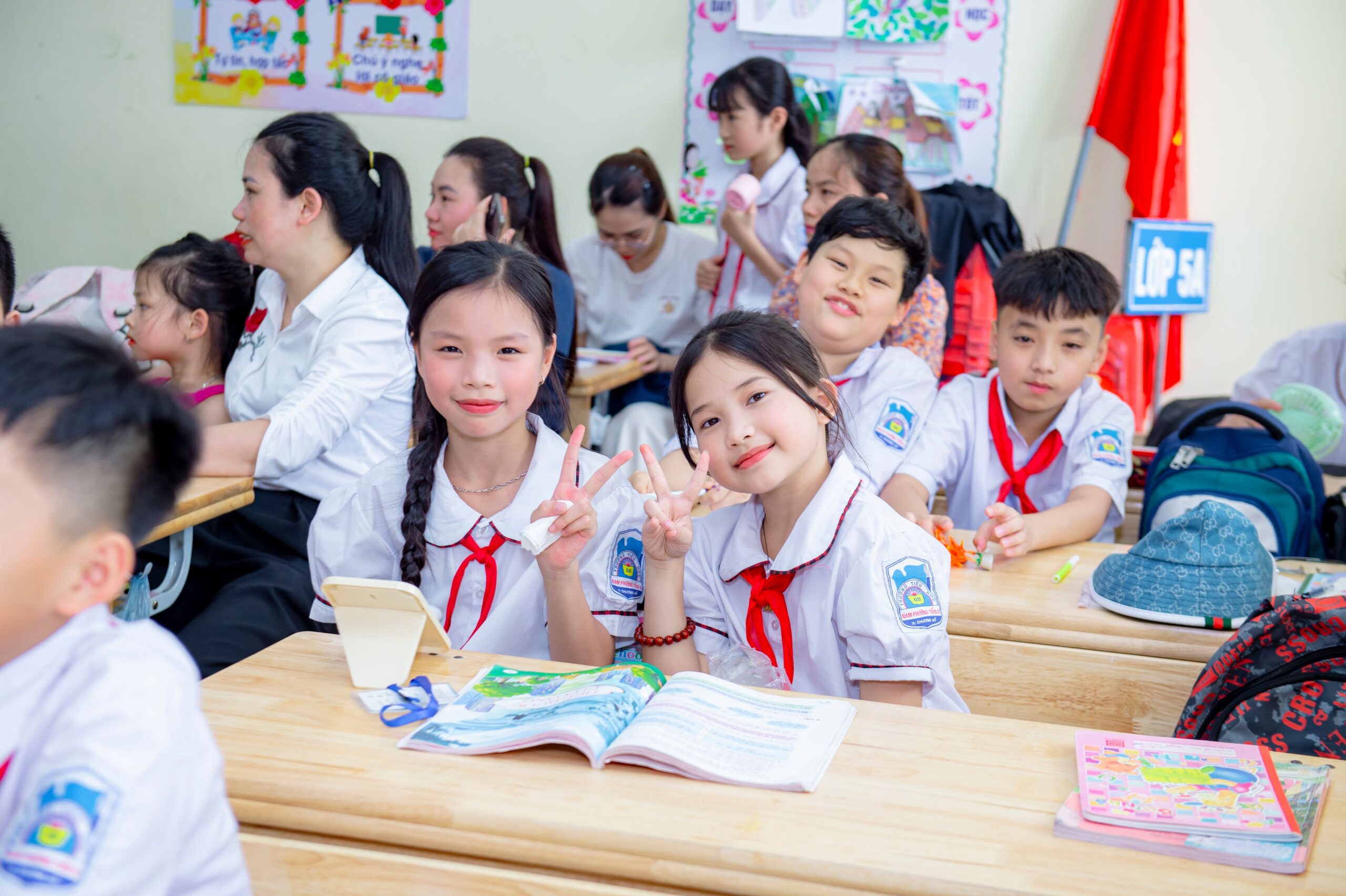
New rules encourage two-session schooling across Vietnam
Seeing Western-looking children at Vietnamese state schools is still unusual, but it is no longer unheard of. For some foreign and mixed-nationality families, the local school has become a genuine alternative to private education.
Western parents in Vietnam broadly have a choice between international schools, bilingual private schools and the Vietnamese state system. International schools offer a familiar curriculum and teaching in English, but charge accordingly. Bilingual schools occupy the middle ground. Public schools teach primarily in Vietnamese and can be difficult to navigate without local knowledge.
Given the high cost of private education, however, the third option should not be dismissed out of hand. If you are not concerned about your child’s lessons being taught entirely in English – perhaps because they receive plenty of exposure to English elsewhere – a state school may be a realistic choice. Vietnam has achieved respectable results for its income level in international education assessments in recent years.
For foreign parents, choosing the local system also means adjusting to a school day that may work rather differently from the one they remember at home. Traditionally, many Vietnamese schools have operated in shifts: pupils attended either a morning or an afternoon session, while better-equipped schools could offer two sessions with lunch and a rest period in between. Arrangements varied according to each school’s classrooms, staff and catering facilities.
New government guidelines are expanding two-session schooling, which has revived an awkward question: what happens to the children during the long break in the middle of the day?
What has changed?
In August 2025, the Ministry of Education and Training introduced new guidelines encouraging schools to provide two teaching sessions per day.
For primary schools, two-session teaching is already the general objective. At secondary level, it is being expanded where staffing, classrooms and other resources permit. The first session concentrates on the compulsory national curriculum. The second can include revision, additional help for weaker pupils, enrichment, arts, sport, life skills and career guidance.
The Ministry says the system should be implemented flexibly, should not overload pupils and must reflect local conditions. It also states that optional activities funded by parents must remain voluntary and transparent. The two sessions do not even have to correspond rigidly to morning and afternoon.
The difficult lunchtime arrangement is therefore not the result of a national order requiring children to go home. It arises when a school offers morning and afternoon lessons but cannot provide bán trú. Usually translated as semi-boarding, bán trú allows children to eat, rest and remain under supervision at school between the two sessions.
At the beginning of the 2026–27 school year, Lao Động reported that parents at some Ho Chi Minh City schools were making four school runs a day because semi-boarding had not yet been organised.
Vietnamese parents have complained that the arrangement is highly disruptive. Some have had to leave work twice during the day, ask relatives to collect their children or pay someone else to handle the lunchtime journey. Others have sent prepared food to school so that their children can eat and rest in the classroom before afternoon lessons.
Recent administrative restructuring appears to have made the problem worse in some places. Schools need the proper legal authority, seals, contracts and approvals before arranging catering. Food-safety concerns also make officials understandably reluctant to improvise. The result, however, is that a policy intended to give children a fuller school day can leave parents responsible for a difficult gap in the middle of it.
What it means for parents
Families should not assume that “two sessions” means a continuous day of supervision. Before enrolling – or before the beginning of each school year – they should ask whether the school provides lunch, a supervised rest period and afternoon care; when these services will begin; and what happens if catering is temporarily suspended.
For a parent working conventional hours, collecting a child at around 10.30 or 11am and returning them after lunch may be close to impossible. Grandparents, domestic helpers and informal childcare can fill the gap, but not every family has access to them. Four daily journeys also mean more traffic, greater expense and additional risk – the opposite of what a well-organised full school day ought to achieve.
Schools will need time to adjust to the new policy, but the direction is clear: towards a fuller and more varied school day, with fewer logistical headaches for parents.