



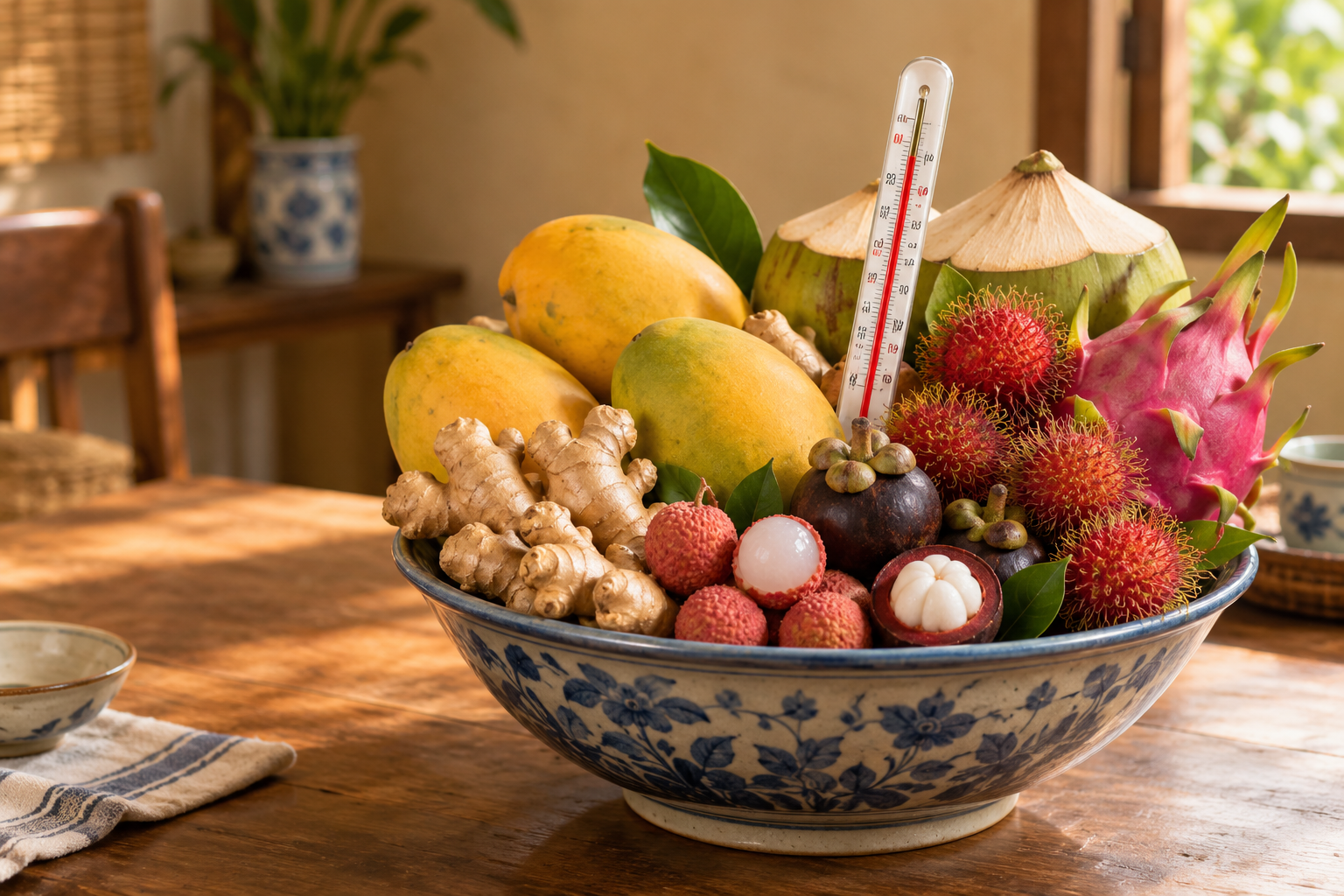
“Hot” and “cold” foods in traditional Vietnamese culture
Anyone with a Vietnamese spouse may recognise the situation. You are about to put something into your mouth when the warning comes: “Don’t eat that now. It will make your body hot”.
This puzzles Westerners like me. How can a piece of mango make your body hot?
The idea comes from the traditional principle of balancing yin and yang. Foods are classified according to the effect they are believed to have on the body: some are warming, others cooling, while a third group is considered neutral.
This has little to do with the temperature at which food is served. A mango straight from the refrigerator can still be considered warming, while a steaming bowl of bitter-melon soup may be regarded as cooling.
When the body gets “hot”
Someone suffering from “internal heat” may complain of acne, mouth ulcers, constipation, poor sleep or a general feeling of discomfort. The suspected cause might be too much fried food, alcohol or one durian too many.
Prominent warming foods include:
- Ginger, chilli, pepper and garlic
- Durian, longan, lychee, jackfruit and ripe mango
- Sticky rice
- Fried and heavily seasoned foods
- Coffee and alcohol
This explains some advice that can puzzle foreigners. Ginger tea is commonly recommended when someone feels cold, has a cough or an unsettled stomach. Yet you may also be warned against drinking it in the evening. Ginger is considered strongly warming, and traditional wisdom holds that consuming it too late may leave the body overheated or disturb sleep.
There is even an old saying that ginger in the morning is as valuable as ginseng, while ginger at night is harmful. This is traditional guidance, not an established medical rule. For most healthy people, an evening cup is unlikely to be dangerous, although ginger may aggravate heartburn in some people.
Cooling things down
When the weather is oppressive or the body feels hot, the answer is often a cooling food or drink:
- Watermelon, pomelo, dragon fruit and mangosteen
- Cucumber and bitter melon
- Mung beans and black beans
- Pennywort juice
- Coconut water
- Lotus seeds and grass jelly
- Leafy vegetables and light soups
Balance can also be built into the meal itself. Seafood and duck, both commonly considered cooling, are often prepared with warming ingredients such as ginger, chilli or black pepper. A family meal may also combine a rich, warming dish with a light vegetable soup rather than push the body too far in either direction.
This is not the same as pairing hot food with a cold drink. In southern Vietnam, an iced tea may happily sit beside a steaming bowl of soup. Nevertheless, some people avoid iced drinks during illness, menstruation or after childbirth because cold is believed to weaken digestion or slow recovery.
The classifications vary between families and regions, and modern nutritional science does not divide food in quite this way. Yet the underlying instinct is easy to understand: food changes how the body feels, and a good meal should restore balance rather than upset it.
But if you want to eat yourself hot, have another mango!