


If you sell products online in Vietnam, whether through Shopee, TikTok Shop, Facebook, livestreams, or your own website, there is a new set of rules you should know about.
On 1 July 2026, Decree 248/2026/ND-CP came into force, providing detailed guidance for Vietnam’s new Law on E-Commerce. Together, the law and decree mark the biggest overhaul of Vietnam’s e-commerce regulations since online shopping first took off.
For most consumers, the changes will be largely invisible. For platforms, sellers, influencers, and anyone running an online business, however, the new framework introduces a much higher level of accountability.
Goodbye Anonymous Sellers
One of the decree’s central goals is to make it harder for bad actors to hide behind anonymous accounts.
Under the new rules, e-commerce platforms must verify the identity of sellers before allowing them to operate. Authorities hope this will make it easier to tackle counterfeit goods, tax evasion, misleading advertising, and the disappearing seller problem that many online shoppers have experienced.
For legitimate businesses, this should be good news. Trust has become one of the most valuable currencies in Vietnam’s digital economy, and verified sellers stand to benefit from a cleaner marketplace.
Livestream Selling Grows Up
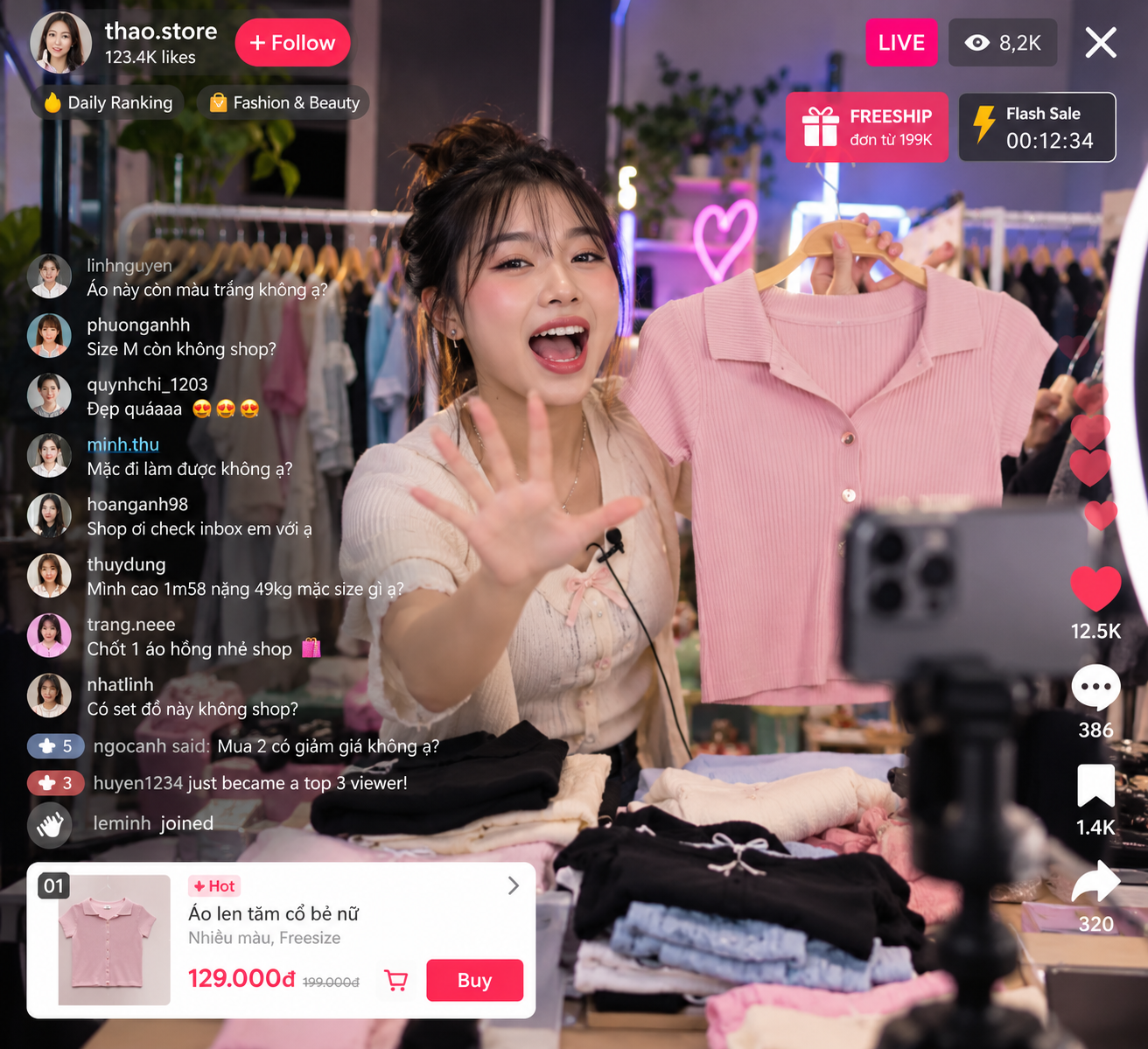
Livestream commerce has exploded in Vietnam over the last few years. A single influencer can move thousands of products in a matter of hours.
The government has clearly taken notice.
The decree introduces specific obligations for livestream sellers, including KOLs, KOCs, influencers, and anyone hired to promote products during sales broadcasts. Product claims must be truthful and sellers must not mislead consumers about quality, origin, pricing, warranties, or availability. Identity verification requirements also apply.
In short, livestream sales are no longer being treated as a regulatory grey area. They are becoming a fully recognised part of Vietnam’s retail ecosystem.
More Responsibility for Platforms
Historically, online marketplaces could sometimes present themselves as neutral intermediaries connecting buyers and sellers.
The new framework expects more.
Platforms are now responsible for managing seller information, handling complaints, cooperating with authorities, maintaining records, and removing products or stores that show signs of violating the law. Social media platforms that include shopping functions also face additional obligations.
This reflects a broader trend seen around the world: regulators increasingly expect platforms to play an active role in maintaining trust and safety.
Consumer Protection Takes Centre Stage
Much of Decree 248 focuses on giving consumers better information before they click “Buy Now.”
Sellers and platforms are expected to provide clear information about products, pricing, origins, return policies, warranties, and dispute-resolution procedures. Personal data protection and complaint handling also receive greater attention.
The message is straightforward: consumers should know who they are buying from and what happens if something goes wrong.
What This Means for Small Businesses
For small online sellers, Decree 248 is unlikely to change day-to-day operations overnight. The direction of travel, however, is unmistakable.
Vietnam is moving toward a more transparent, more regulated, and more professional e-commerce environment. Businesses that maintain accurate records, communicate honestly with customers, and comply with platform requirements will find themselves increasingly aligned with the new rules.
Those relying on anonymity, questionable marketing tactics, or unclear business practices may find the environment becoming less comfortable.
Vietnam’s e-commerce market remains one of Southeast Asia’s fastest-growing digital economies. Decree 248 is not designed to slow that growth. Rather, it seeks to ensure that as the market matures, trust grows alongside it.
For online businesses, the takeaway is simple: compliance is no longer something to think about later. It is becoming part of the cost of doing business online in Vietnam.