


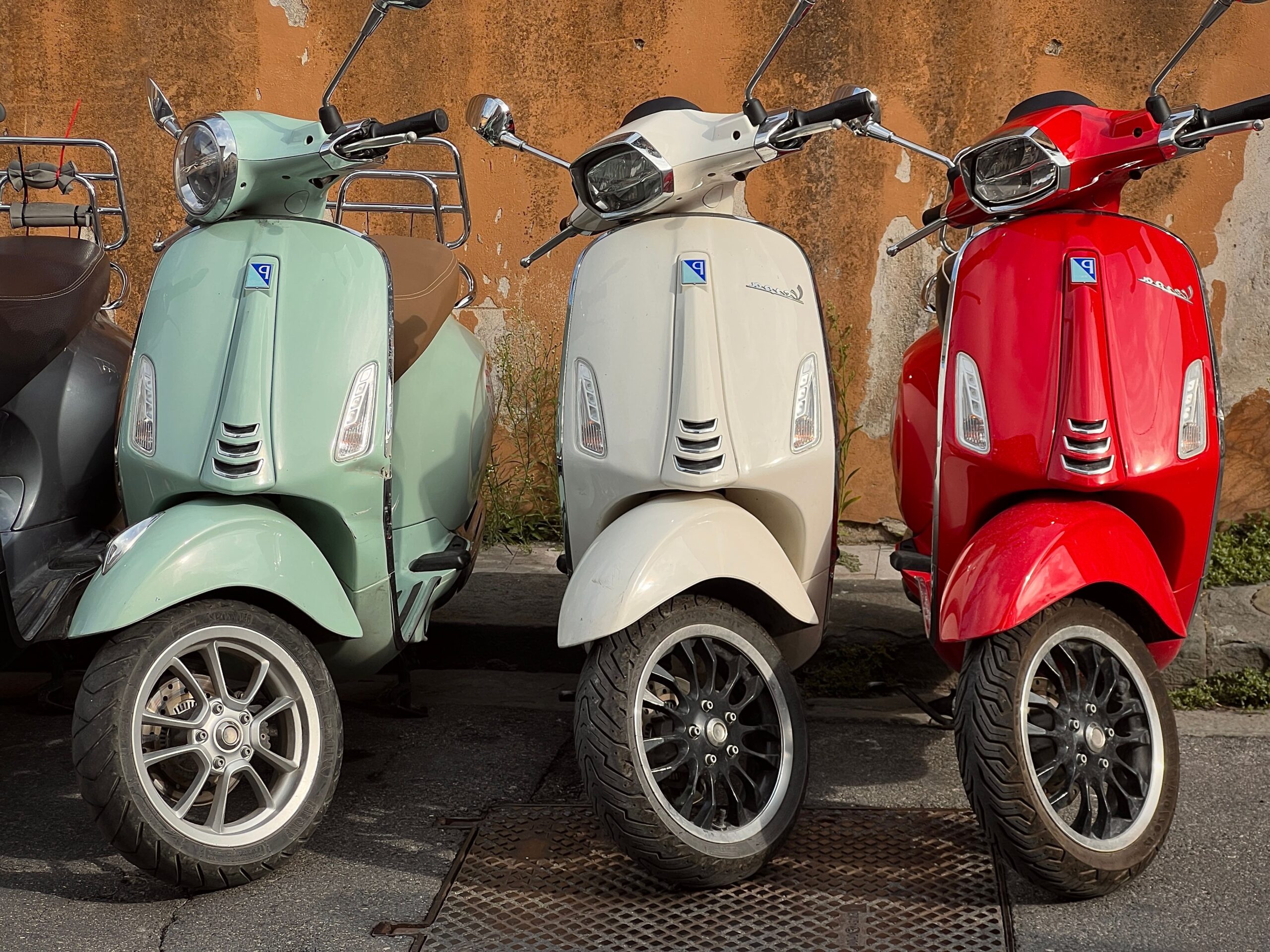
What‘s the best way to avoid walking? Petrol or electric?
If you come from Europe, one of the first adjustments in Vietnam is discovering that a distance you would normally walk is apparently considered a journey.
In your typical European city, walking fifteen minutes to a café, supermarket or station is perfectly ordinary. In Vietnamese cities, everyday transport works differently. The motorbike fills much of the space that walking, cycling and public transport occupy elsewhere. People ride to work, to lunch, to the shops and sometimes somewhere so close that a European would barely have finished putting on his shoes.
There are good reasons. It is hot, pavements can be unreliable and the motorbike is cheap, quick and remarkably well suited to Vietnamese cities.
Live here for a while and the temptation is obvious. But before buying one, there is the small matter of whether you are actually allowed to ride it.
Does Vietnam accept foreign licences?
Sometimes.
Vietnam recognises an International Driving Permit issued under the 1968 Vienna Convention, together with the corresponding national licence. Crucially, that licence must cover the vehicle you are riding. A car licence does not become a motorcycle licence simply because you have crossed a border.
Not every country issues the right type of IDP, and not every document advertised online as an “international driving licence” qualifies.
Foreigners living in Vietnam can also exchange a valid foreign licence for an equivalent Vietnamese one. Under the rules effective since July 2026, foreigners with a valid national licence and a visa or temporary residence card valid for at least 90 days, or permanent residence, may qualify.
Again, the word equivalent matters. If your licence back home does not include motorcycles, converting it will not magically add them.
If you do not have a motorcycle entitlement to convert, getting a Vietnamese motorcycle licence means going through the Vietnamese licensing and testing system.
Is it worth it?
If you live here and intend to ride regularly, yes.
Riding without the required licence is no longer a trivial gamble. For motorcycles up to 125cc, or electric motorcycles up to 11kW, the fine is 2–4 million đồng. Above 125cc or 11kW, it rises to 6–8 million đồng.
Then there is the helmet. Riding without one, or without fastening it properly, attracts a 400,000–600,000 đồng fine.
The larger problem may come after an accident, when questions of insurance and liability make the roadside fine look like the cheap part.
The licence-free alternative
There is, however, an interesting third option between walking everywhere and getting a motorcycle licence: the moped.
Vietnamese law classifies a petrol two-wheeler as a moped if its design speed is no more than 50km/h and its engine no larger than 50cc. For an electric moped, the same 50km/h limit applies, with maximum motor power of 4kW.
And here is the useful bit: you do not need a driving licence to ride one.
The minimum age is 16. From 18, riders can qualify for the A1 and A motorcycle licence categories, but a qualifying moped itself does not require one.
That makes small electric scooters particularly attractive to foreigners who mainly need transport around town. They offer much of the convenience of a motorbike without immediately having to deal with motorcycle licensing.
Petrol mopeds can qualify too, of course, but electric models are increasingly the obvious urban alternative.
Just check the specifications carefully. Electric does not automatically mean licence-free. A powerful electric scooter may legally be a motorcycle, bringing you straight back into licence territory.
For anyone serious about keeping their step count under control without calling Grab every ten minutes, the electric scooter may be Vietnam’s ultimate mobility hack.