


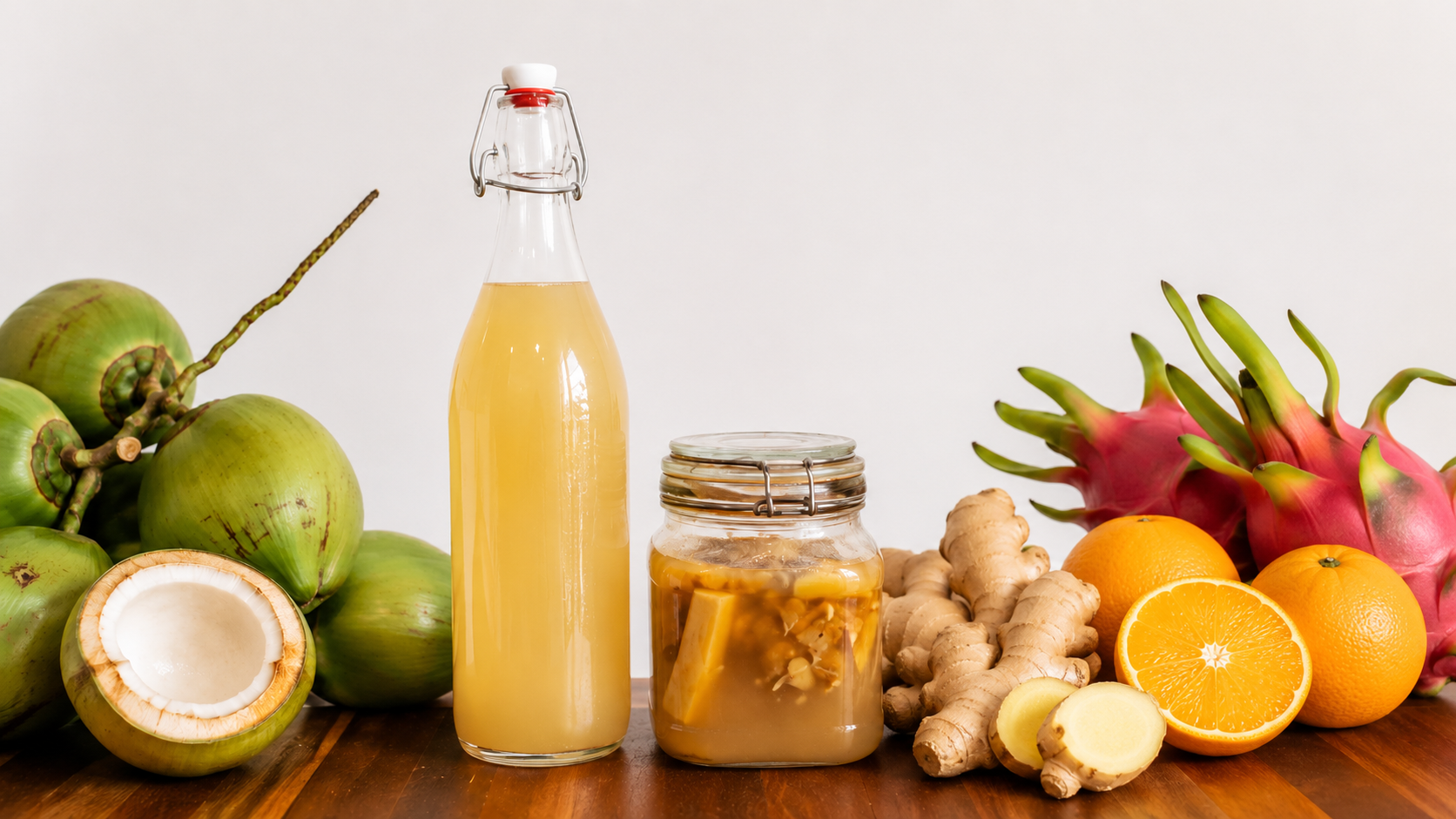
Vietnam has an abundance of fresh fruit, and coconuts. You can buy them at the market for very little money, or drink freshly squeezed juices and smoothies by the side of the street.
But there is another thing you can do with all that tropical bounty: ferment it.
Natural lemonade is surprisingly easy to make. All you need is fruit juice, a little sugar and a fermentation starter. I recently made a batch with fresh coconut water and discovered something unexpected: once fermented and carbonated, it tastes remarkably like blue Gatorade.
Hence the name. Any resemblance in nutritional composition is purely coincidental.
Start with a Ginger Bug
A ginger bug is a natural fermentation starter made from fresh ginger, sugar and water. Yeasts and bacteria associated with the ingredients feed on the sugar, producing organic acids and carbon dioxide.
Once active, the bug can be added to sweetened juice, tea or other drinks, where fermentation continues. Bottling traps the carbon dioxide and creates natural fizz, along with potentially small amounts of alcohol.
Despite the name, ginger isn’t essential. Other fruits, herbs and edible roots can also provide microorganisms capable of starting fermentation. Ginger is simply popular because it ferments readily and adds plenty of flavour.
Bottle It Up
After several days of feeding, your ginger bug should become visibly active, with bubbles appearing when you stir it. Now you can use some of the liquid to start your drink.
I used fresh coconut water. Add some active ginger-bug liquid to the bottle, top it up with coconut water and leave some space at the top.
You can experiment with other juices as well. Orange, pineapple, passion fruit and combinations thereof are all begging to be carbonated.
Burping and Waiting
Now the microorganisms do the work. They consume sugar and produce carbon dioxide, gradually turning your rather flat-looking bottle of juice into something considerably more interesting.
Depending on temperature, sugar content and how lively your starter is, carbonation may develop within a few days.
Pressure can build up quickly in a sealed bottle, so use bottles designed for carbonated drinks and open them carefully. Fermentation is charming right up until it redecorates the ceiling.
Nature’s Gatorade
Once you’re happy with the carbonation, put the bottle in the fridge. Cold temperatures slow fermentation considerably and help keep the drink from becoming progressively more sour and explosive.
Pour it cold.
My coconut version turned out slightly tart, gingery, refreshing and bizarrely reminiscent of blue Gatorade. Except that it came from a coconut rather than a laboratory with a Pantone catalogue.
Does it detox your liver? Rebalance your microbiome? Supercharge your immune system? Align your chakras while reversing biological ageing?
Probably best not to get carried away.
Fermented drinks can contain live microorganisms and various fermentation products, and coconut water naturally contains minerals such as potassium. But homemade ginger-bug lemonade isn’t a standardized probiotic drink, and there is no need to dress it up as medicine.
Drink it because it tastes good.
Sometimes bubbles are enough.