

Put two foreigners in a café in Vietnam and, sooner or later, they may start comparing visas.
“I’ve got a two-year visa.”
“Nice. Mine’s multiple entry.”
“I don’t even need to do visa runs anymore.”
“Well, I’ve got a TRC.”
At this point, someone should probably put the passports away and order another coffee.
Because duration, multiple entry and an impressive-looking card are only part of the story. The more interesting question is: what are the letters?
DN1. LĐ2. TT. ĐT3. DL. VR.
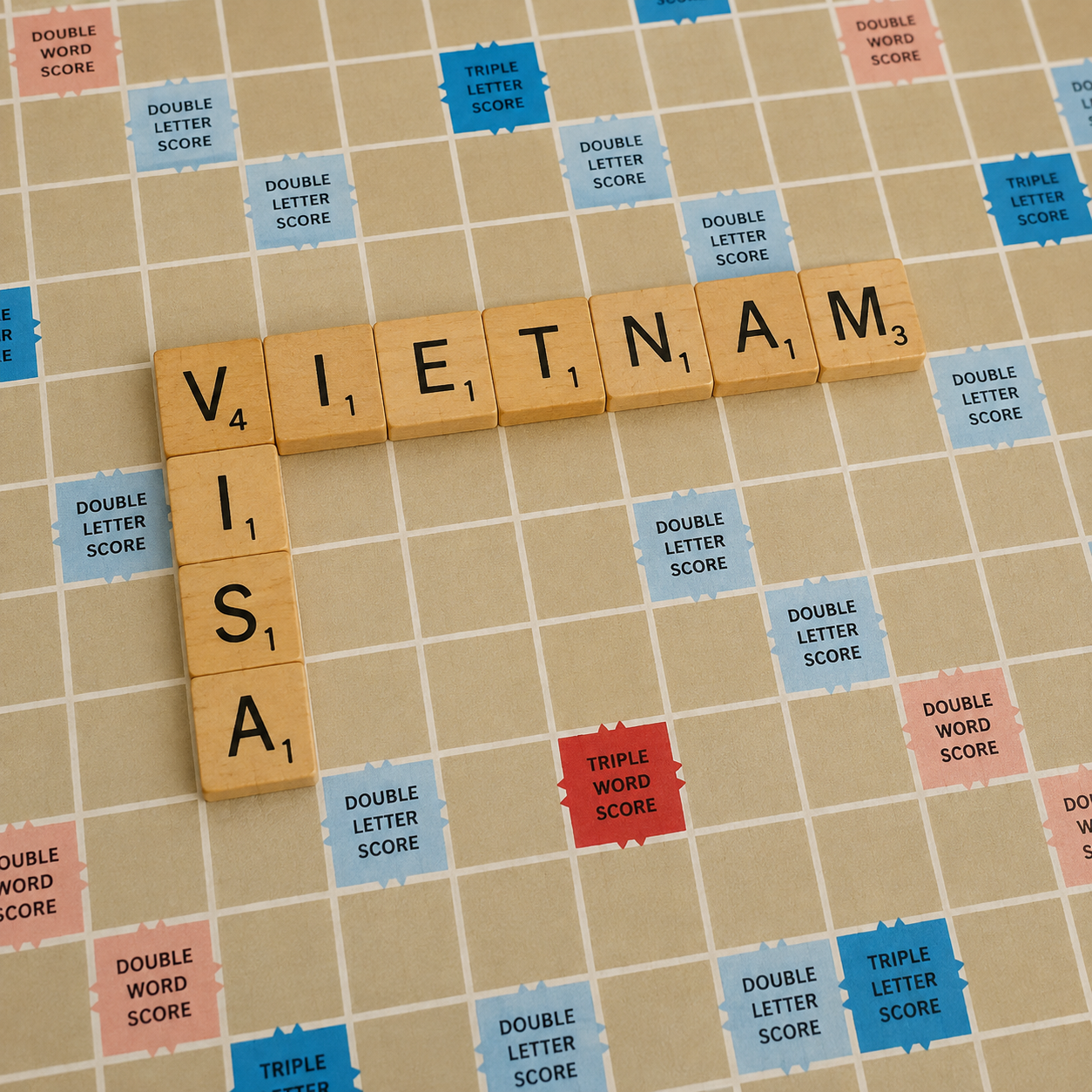
They have the reassuring appearance of something precise. Unfortunately, they can also look like somebody dropped a Scrabble set onto an immigration form.
But the letters matter.
Vietnam does not have one generic visa that simply means “you may stay here.” The visa symbol identifies the legal purpose for which a foreigner is permitted to enter and stay in Vietnam.
What Do the Vietnam Visa Codes Mean?
Here is the practical glossary:
- DL – Tourism.
- DN1 – Working with a legally established enterprise or organisation in Vietnam.
- DN2 – Entering to offer services, establish a commercial presence or conduct certain activities under international treaties.
- LĐ1 – Employment where the foreign worker is exempt from the work-permit requirement.
- LĐ2 – Employment where a work permit is required.
- ĐT1–ĐT4 – Foreign investors and representatives of foreign organisations investing in Vietnam. The category depends principally on the investment and applicable statutory criteria.
- TT – Certain dependent family members of qualifying foreign residents, and parents, spouses or children of Vietnamese citizens.
- VR – Visiting relatives or entering for another qualifying purpose.
- DH – Study or internship.
- HN – Conferences and seminars.
- LS – Foreign lawyers practising in Vietnam.
- NN1 – Heads of representative offices or projects of international organisations and foreign NGOs.
- NN2 – Heads of representative offices or branches of foreign businesses and certain other foreign organisations.
- NN3 – People working with foreign NGOs, representative offices, branches and similar organisations.
- PV1 / PV2 – Journalists, with PV1 covering resident journalists and PV2 short-term journalistic activity.
- LV1 / LV2 – Work with specified Vietnamese state, political, social and related organisations.
- NG1–NG4 – Diplomatic and official categories.
- EV – Electronic visa.
- SQ – A special visa category issued in specified circumstances.
- UĐ1 / UĐ2 – New preferential categories introduced in 2026, including certain highly qualified digital-technology personnel and qualifying family members.
Why Does the Visa Symbol Matter?
Because the letters are not decorative.
Someone holding a DL tourist visa, for example, does not acquire the same immigration status as someone holding an LĐ2 employment visa simply because both are legally present in Vietnam. Likewise, DN, ĐT and TT visas reflect different legal grounds for the holder’s stay.
The category also affects potential visa validity. Under the current rules, for example, LĐ1 and LĐ2 visas can be valid for up to two years, while ĐT3 can run for up to three years and ĐT1 and ĐT2 for up to five years. DL, HN and EV visas have a maximum validity of 90 days.
Changing what you do in Vietnam does not automatically change your immigration status either. Vietnamese law restricts changes of visa purpose to specified circumstances. Where a permitted change occurs, a new visa with the appropriate symbol and validity is issued.
So when somebody asks, “What visa do you have?”, the most useful answer may not be “two years” or “multiple entry.”
It is those little letters.
And if the letters on your visa do not seem to match what you are actually doing in Vietnam, it is worth checking with a qualified Vietnamese immigration lawyer or legal professional before assuming that they are close enough.